Market and limit order
A market order fills right away at the current price. A limit order waits until price reaches the price you set.
What it is
An order is your instruction to the exchange to buy or sell. A market order says: "fill it now at the best price available". A limit order says: "fill it only at my price or better". The first guarantees the fill but not the price. The second guarantees the price but not the fill.
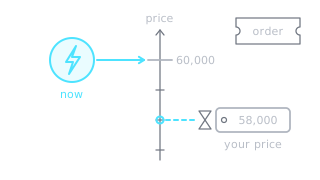
How they work in the order book
Other people's limit orders wait in the exchange order book. A market order fills against them starting from the best price. If the order is large or the coin is illiquid, it reaches worse prices too, and that is slippage. A limit order that cannot fill right away goes into the book and waits.
Fees differ too. An order that rests in the book and so adds liquidity is a maker order and usually pays a lower fee. An order that takes liquidity is a taker order. A market order is always a taker.
| Feature | Market order | Limit order |
|---|---|---|
| Fill | Immediate | Only if price gets there |
| Price | Not known in advance | Yours or better |
| Fee | Taker | Usually maker |
| Main risk | Slippage | No fill |
Example
BTC is at 60,000. A market order would fill right away at roughly 60,000, plus the spread and any slippage. A limit buy at 58,000 fills only if price drops there. If price turns at 58,200, the order stays unfilled.
When selling it works the other way round: a limit sell sits above the current price and waits for price to rise to it. A market sell fills at once at the best price buyers are offering.
Common mistakes
- Using market orders on illiquid coins. The fill can be much worse than the price on screen.
- Placing a limit order and forgetting it. It may fill days later, when the situation is completely different.
- Mixing up limit and stop orders. A stop order activates when price reaches a level and is mostly used to cap a loss.
- Placing limit orders exactly on round numbers. Many orders cluster there, so price sometimes turns just before reaching them.
How to practise
If your exchange offers a demo account, try both order types there. Each time, compare the price you saw on screen with the fill price and check the fee you paid. You will quickly get a feel for when the fill matters more and when the price does. A plan for your first steps is in How to start trading crypto.
Frequently asked questions
Which order is cheaper?
Can a limit order fill partly?
When is a market order used?
You can review and test yourself on these terms in the Skenuok app.