DCA, dip and ATH
DCA means buying the same amount at regular intervals regardless of price, and a dip is a short price drop. ATH and ATL are the highest and lowest price ever.
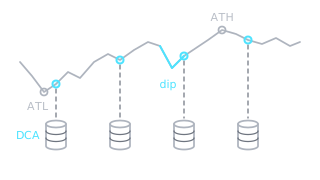
What DCA is
DCA (dollar-cost averaging) means buying in parts: the same amount is invested at regular intervals, for example monthly, regardless of price. When price is low the same amount buys more coins, when it is high fewer. So the average purchase price ends up below the simple average of those prices. DCA is used more for long-term accumulation than for short-term trading, and it does not say when to sell.
Dip and ATH
- Dip: a short price drop. "Buying the dip" means trying to buy after a fall, but nobody knows in advance whether the fall is over. DCA does not try to guess the bottom.
- ATH (all-time high) is the highest price ever, ATL (all-time low) the lowest. When price breaks its ATH, there are no earlier levels above it on the chart, so it is harder to judge where it may stop.
Real example: BTC in 2022
On 10 November 2021 BTC/USDT set its then all-time high of 69,000. Suppose that in 2022, on the first day of each month, 100 USDT of BTC was bought at the daily close. Twelve purchases spent 1,200 USDT at an average price of about 26,400, while the simple average of those 12 prices was about 30,400. On 2022-12-31 BTC was 16,542, so the coins were worth about 750 USDT, roughly 37% less than was spent. The lowest price, 15,476, came on 2022-11-21. DCA smoothed the purchase price but did not prevent a loss.

Common mistakes
- Thinking DCA guarantees a profit. If price keeps falling, the average falls with it, but the loss remains.
- Applying DCA to any coin. If the project collapses, regular buying only makes the loss bigger.
- Investing money you may need soon.
- Abandoning the plan after the first big drop, or raising the amounts in euphoria near the ATH. See FOMO, FUD and HODL.
How to practise
Pick a period on a historical chart and list monthly purchases in a spreadsheet: date, price and amount. Work out the average price and compare it with the simple average of prices and with the price at the end of the period. Repeat for a rising, a falling and a sideways period. How to prepare for the first steps is covered in How to start trading crypto.
Frequently asked questions
Is DCA better than buying all at once?
How often do DCA purchases happen?
What do ATH and ATL mean?
You can review and test yourself on these terms in the Skenuok app.