Liquidation and margin
Margin is your own money backing a leveraged position. If losses nearly eat it up, the exchange force-closes the position: that is liquidation.
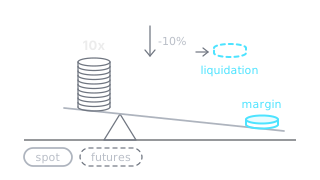
What margin is
Margin is the money that backs a leveraged position. Initial margin is needed to open it: for example, a 1,000 USDT position at 10x needs 100 USDT. Maintenance margin is the minimum that must remain for the position to stay open. The exchange sets its size.
How liquidation happens
When losses push the margin below the maintenance level, the exchange force-closes the position. In futures this is usually based on the mark price rather than the last trade, so the exact level can differ from the spot chart.
Roughly: a 10x long would lose its entire margin after a 10% drop, and it is liquidated even earlier because of maintenance margin and fees. The rule of thumb: divide 100% by the leverage. In isolated mode liquidation takes only the margin assigned to that position; in cross mode the whole account balance is collateral.
Real example: BTC on 10 October 2025
On 10 October 2025 BTC/USDT fell from 114,267 to 102,000 within one hour (21:00-22:00 UTC), about 11%, and closed the hour at 113,452. From the day's high of 122,550 to the low, the drop was about 17%. Price came back within the same hour, but for a 10x long opened at 114,267 a move of that size would be enough for liquidation. The recovery would not help such a position: a liquidated position is closed.

Common mistakes
- Placing the stop beyond the liquidation price. The stop then never triggers, because liquidation comes first.
- Topping up margin on a falling position so it does not "get kicked out". That puts even more money into the loss.
- Using cross mode without realising the whole account is at risk.
- Believing price has to come back. Even if it does, it changes nothing for a liquidated position.
How to practise
Before each practice leveraged trade, work out which move against you would wipe out the margin (100% divided by the leverage) and compare it with the distance to the stop. If the stop is further away, the trade is planned wrong. Also write down the margin mode: isolated or cross. More in Leverage and futures.
Frequently asked questions
Can you lose more than your margin?
How do you estimate the liquidation price?
Why do liquidations make sudden drops worse?
You can review and test yourself on these terms in the Skenuok app.